Updated: September 2026
Tampa's investment story changed in 2026, and most of the advice circulating online hasn't caught up.
The 2021–2023 playbook was simple: buy almost anything in Hillsborough County and ride the appreciation. That playbook is dead. Metro home values have moved somewhere between -1.3% and +1.2% year over year. The median days on market has stretched to 37 to 46 days. Roughly 40% of active listings now take a price cut before they sell, and sellers are closing at about 96.8% of list price.
That is not a crash. It is a market that has stopped doing the work for you.
Capital hasn't left Tampa. It has gotten selective. It's moving out of condos and non-elevated coastal properties and into single-family rentals, suburban build-to-rent, and specific redevelopment corridors where public infrastructure dollars are already committed. The spread between the right asset and the wrong asset in this market is now wider than the spread between Tampa and other metros.
Here's where the money is actually going — and where it's quietly leaving.
Is Tampa a Good Place to Invest in Real Estate in 2026?
Yes, but the thesis has shifted from appreciation to cash flow. Tampa's price-to-rent ratio sits at 14.8–15.0, cap rates run 5.2% to 6.5% depending on class, and inventory has normalized to 4.2–5.1 months — a balanced market. Appreciation is forecast at just +1.0% to +3.5% annually through 2027. Investors buying for yield and holding long-term will do well here. Investors counting on rapid price growth to bail out a thin deal will not.
The two variables that decide most Tampa deals in 2026 are insurance and asset type. A landlord policy in an inland Zone X property runs $2,800–$4,200 per year. The same policy on a non-elevated coastal home in Zone VE can add $2,400 to $5,000+ in flood coverage alone. That single line item is the difference between a 6.5% cap rate and a 3% one.
Why Capital Still Flows Into Tampa
The fundamentals that made Tampa attractive are still intact — they've just moderated.
Population growth continues, but it has relocated within the metro. Florida's net migration cooled from a 2022 peak near 599,000 to roughly 201,000 residents annually. More importantly for investors, the growth is no longer landing where it used to. Hillsborough and Pinellas counties are seeing flat to slightly negative net domestic migration, offset by international arrivals. The domestic movers are going to Pasco and Polk, which remain top national destinations for people chasing newer housing stock at lower price points. The broader Tampa Bay region still holds a ~2.1% annual net migration rate, second-fastest among major Florida metros, with MSA population above 3.2 million.
The job base is diversified but flat. The Tampa MSA added 3,600 net nonfarm jobs over the trailing twelve months — modest, and concentrated. Education and health services added 6,000 jobs and now represent 17% of employment. Construction and manufacturing added 1,000. Professional and business services and leisure and hospitality each added 800. Trade, transportation, and utilities shed 1,200 as logistics normalized. Unemployment sits at 4.8%.
For a rental investor, the composition matters more than the headline. Healthcare is the growth engine, and healthcare workers are exactly the tenant base that makes Seminole Heights, Ybor City, and the corridors near Tampa General and AdventHealth work as rentals.
Corporate relocation is still real, but the model changed. Financial and fintech firms continue expanding back-office and technology operations on top of existing footprints from Raymond James, Citi, and DTCC. Mid-sized software providers and defense technology contractors are moving into Channelside and the Westshore Business District. Notably, companies are adopting hub-and-spoke models — establishing regional operational hubs in Tampa rather than full headquarters relocations. That produces steady mid-level professional tenant demand rather than executive home-buying waves.
The tax structure remains the quiet advantage. Florida imposes no state personal income tax on wages, capital gains, dividends, or pass-through income, no estate, inheritance, or gift tax, and a 5.5% corporate rate. For an out-of-state investor running properties through an LLC, that's real money retained annually.
Where the Smart Money Is Going in 2026
1. West Tampa and the West Riverfront
This is the clearest example in Tampa of public money arriving before private money. Institutional and local investors are buying ahead of committed infrastructure spending — which is a materially different bet than buying ahead of a press release.
The numbers:
- Median home sale price: $435,000 – $465,000
- Un-renovated historic single-family: $350,000 – $400,000
- New infill and townhomes: $550,000 – $750,000+
- Median rent: $1,850 – $2,250/month
- Class A units in the West River footprint: $2,300 – $2,800/month
- Older multifamily: $1,500 – $1,700/month
- YoY price growth: +1.5% to +3.0%
What's actually being built:
The West River Plan — a joint effort between the Tampa Housing Authority and private developers — is converting legacy public housing into mixed-income, mixed-use development. Boulevard at West River is delivering phased residential towers, garden-style buildings, senior housing, and ground-floor retail. The West River Walk Expansion adds roughly two miles of new Riverwalk along the western bank of the Hillsborough River, with over-water boardwalks and living shorelines. West River BUILD commits over $30 million in federal and local funding to multi-modal transportation, protected cycle tracks on Platt Street, traffic calming, and pedestrian connections into Downtown.
Separately, the West Tampa CRA uses tax increment financing to reinvest local property tax revenue into façade grants and streetscaping along Main Street, Howard Avenue, and Armenia Avenue, multi-million dollar rebuilds including the West Tampa Recreation Center, and infill housing incentives that preserve the historic cigar-worker casitas.
The play: Small multifamily and value-add single-family purchased at the $350K–$400K un-renovated tier, held through the Riverwalk extension. The spread between the un-renovated and new-construction tiers is the entire opportunity — roughly $200K per door.
The risk: Infrastructure timelines slip. This is a five-to-seven-year hold, not a flip.
2. Seminole Heights and Riverside Heights
Seminole Heights is the cleanest value-add market in Tampa, and it's currently offering something it hasn't in five years: negotiating room.
The numbers:
- Median home sale price: $415,000 – $435,000
- Smaller un-renovated homes: $320,000 – $370,000
- Restored bungalows and luxury infill: $650,000 – $900,000+
- Median rent by unit: Studio ~$1,400 / 1BR ~$1,610 / 2BR ~$1,890 / 3BR ~$2,200
- Rent trend: -3% YoY (normalizing from peak)
- 5-year appreciation: +45% to +55%
- Days on market: 43 – 48 days
- Sale-to-list ratio: 97.5% – 98.0%
- Cap rate (Class B): 5.8% – 6.8%
Prices peaked around $530,000 in mid-2022 and have since settled to sustainable levels. Buyers are selectively negotiating — a sale-to-list ratio under 98% means offers below ask are getting accepted.
Renovation costs you need to underwrite honestly. These are mostly 1920s–1950s Craftsman bungalows with plaster walls, original framing, and dated electrical and plumbing. That pushes costs above Tampa averages:
- Cosmetic / light remodel: $25 – $60 per sq ft
- Mid-level full-house remodel: $75 – $150 per sq ft
- Gut renovation / historic restoration: $150 – $270+ per sq ft
Line items: kitchen $20,000–$55,000, bathroom $8,000–$25,000, HVAC $4,000–$8,500, roof replacement $8,000–$18,000+.
The play: Buy at $320K–$370K, mid-level remodel at $75–$150/sq ft, rent at the 2–3BR tier or hold for resale into the $650K+ restored market. The math works. It does not work if you underestimate the renovation by 30%, which is the most common mistake investors make in this neighborhood.
3. South Tampa and Hyde Park
South Tampa is not a cash-flow market and never has been. Cap rates here run 4.8% to 5.5%. What it offers is the most durable demand base in the metro, anchored by an employer that doesn't relocate.
The numbers:
- Median home price (overall): $650,000 – $750,000
- Entry-level, Interbay: $420,000 – $480,000
- Luxury — Hyde Park, Palma Ceia, Sunset Park: $900,000 to $2.5M+
- Hyde Park rents: Studio ~$1,890 / 1BR ~$2,140 / 2BR ~$3,000 / 3BR ~$3,680
- Days on market: 45 – 60 days (turnkey under $700K moves in 21 days or less; $800K+ or high-flood-insurance properties sit closer to 60)
The MacDill factor. MacDill Air Force Base supports approximately 16,900 active-duty joint service personnel across the 6th Air Refueling Wing, 927th ARW, USCENTCOM, and USSOCOM, plus 8,100–9,000 civilian employees and contractors — a total on-site workforce above 25,000. The base supports roughly 34,600 family dependents and over 130,000 regional retirees in the area.
That produces something rare: a permanently renewing tenant pool on predictable PCS cycles, largely insulated from local economic swings, with housing allowances that support market rents.
The play: Entry-level Interbay properties at $420K–$480K targeting military and contractor tenants. That's the price point where South Tampa's demand advantage and reasonable acquisition cost actually overlap.
The caution: Check the flood zone before you check anything else. The 60-day DOM on high-insurance properties is telling you exactly how the market is pricing that risk.
4. Wesley Chapel, Riverview, and Land O' Lakes
This is where the domestic migration is actually landing, and it's where build-to-rent capital has concentrated.
The numbers:
- Wesley Chapel median home price: $430,000 (~$2,970/month to own at 20% down, including taxes, insurance, HOA)
- Riverview rents: 1BR $1,604 / 2BR $1,905 / 3BR SFR $2,322
- Rent trend: flat to -0.2% YoY
- Pasco permitting volume: ~7,500 – 8,000 units annually
Pasco is among Florida's most active residential permit zones, weighted heavily toward suburban single-family detached homes, driven by Epperson, Wiregrass Ranch, and Avalon Park.
The build-to-rent landscape. Wesley Chapel has become the metro's epicenter for purpose-built single-family rentals:
- BB Living at Epperson Ranch: $2,695 – $3,200/month, with Crystal Lagoon access
- SkyMor Wesley Chapel: $2,150 – $2,900/month, 2–3BR detached
- Beacon at Epperson: $2,000 – $2,400/month, smart-home features, attached garages
- Hamlet Avalon Park: $1,750 – $2,420/month
- Groveparc and Chapel Commons: $2,030 – $2,750/month, attached townhomes
Why BTR is working while apartments aren't. With mortgage rates at 6.1%–6.5%, families who would have bought are renting instead — but they want garages, yards, and school districts. Single-family rentals across the metro are running 4%–6% vacancy with ~4% annual rent growth, versus 10.7% vacancy and declining rents in apartments. That divergence is the single most important number in this entire article.
What developers need to know about costs. Pasco's impact and permit fee stack averages roughly $32,770 per single-family detached lot: mobility/transportation ~$11,660, school impact ~$10,328, utilities connection ~$5,424, and parks, fire, and permitting surcharges above $5,350. If you're building rather than buying, that fee stack has to be in your pro forma from day one.
The play: Individual single-family rentals in Riverview and Brandon at the $350,000–$410,000 entry point, where gross yields outperform central Tampa on lower acquisition cost.
5. Ybor City
Ybor is the highest-variance play on this list, and the only one where a genuinely transformational development is already under construction rather than proposed.
The numbers:
- Median home sale price: $305,000 – $385,000
- Historic condo conversions: $130,000 – $260,000
- Single-family craftsman and townhouse infill: $350,000 – $650,000+
- STR occupancy: 62% – 68% average, peaking 75%–80% during Gasparilla, concert, and festival season
- STR average daily rate: $160 – $220/night (1BR ~$150–$180; multi-bedroom homes $250–$400+)
- Estimated gross STR income: $32,000 – $48,000/year
What's coming. Gasworx is a 50-acre mixed-use district by KETTLER and developer Darryl Shaw physically bridging Ybor City and the Channel District — up to 5,000 residential units, 500,000 sq ft of office, and 140,000 sq ft of retail. Ybor Harbor proposes $35 million in CRA-backed infrastructure to reconnect Ybor to the Ybor Channel waterfront with residential towers, boardwalks, and green space. Meanwhile, 7th Avenue's historic cigar factories continue converting into boutique hotels, creative office, breweries, and food halls.
The play: Walkable-to-7th-Avenue properties with dedicated parking, run as short-term or medium-term rentals, held through Gasworx delivery.
The trap: Those $130K–$260K historic condo conversions look like the cheapest entry in Tampa. Read the next section before you buy one.
Where the Smart Money Is Pulling Back
Knowing where not to put money is worth as much as knowing where to put it. Two Tampa asset classes are being actively exited by informed capital in 2026.
Condos: Downtown, Channelside, and Water Street
If you read a Tampa investment article from 2024 recommending Channelside condos, understand that the regulatory ground has shifted underneath that advice.
What changed. Senate Bill 4-D, Senate Bill 154, and House Bill 1021 collectively rebuilt Florida condo law:
- Milestone inspections: Buildings three stories or taller must complete Phase 1 structural inspection at 30 years of age — or 25 years if within three miles of the coastline — then every 10 years. Buildings that hit compliance age between 2022 and 2024 received extensions through late 2025 and 2026, which means a wave of expensive engineering audits is landing right now.
- Structural Integrity Reserve Studies (SIRS): Required every 10 years covering roofing, load-bearing walls, fire protection, foundation, waterproofing, elevators, and electrical.
- No more reserve waivers: For budgets adopted after December 31, 2024, boards and owners can no longer vote to reduce, defer, or waive reserve funding for structural components. Full funding is mandatory.
What it's doing to the market:
Metric | Current State |
|---|---|
HOA dues and special assessments | +20% to +60%+, with lump-sum assessments of $10,000–$75,000+ per unit |
Active condo inventory | Up 45%–70% YoY across Hillsborough and Pinellas |
Median price performance | -5% to -12%, concentrated in 1970s–1980s stock |
Months of supply | 7.5 – 9.0+ months — buyer's market territory |
Fixed-income owners and investors are listing units specifically to get out ahead of assessment bills. Newly constructed Class A luxury units are holding value. Older un-renovated inventory is not.
The honest read: A $180,000 Ybor condo conversion with a $45,000 special assessment and dues that doubled is not a $180,000 asset. Some of these will eventually be genuine distressed opportunities — but only for buyers who obtain the SIRS, the milestone inspection report, the reserve funding schedule, and the association's assessment history before making an offer. Anyone buying condos in Tampa in 2026 on price alone is buying someone else's deferred maintenance.
Non-Elevated Coastal Property
Hurricanes Helene and Milton permanently repriced flood risk in Tampa Bay, and the market has split cleanly along elevation lines.
The spread:
Property Profile | Price Trajectory |
|---|---|
High-risk coastal, non-elevated | -5% to -12% |
High-risk coastal, fully elevated | 0% to +3% |
Non-flood infill (Zone X) | +3% to +6% |
Substantially damaged and un-elevated coastal properties drew a surge of institutional and local cash buyers acquiring distressed lots at 15% to 30% below prior market value. Un-renovated, low-elevation, ground-floor homes now sit 60+ days on market while elevated or retrofitted structures move.
Flood insurance by zone:
- Zone X (low/moderate): $500 – $610/year
- Zone A / AE (high risk, inland and bay): $1,000 – $1,386/year
- Zone VE (coastal wave hazard): $2,400 – $5,000+/year under Risk Rating 2.0
Statewide averages run $760–$878; Hillsborough County averages ~$835, Pinellas ~$1,025.
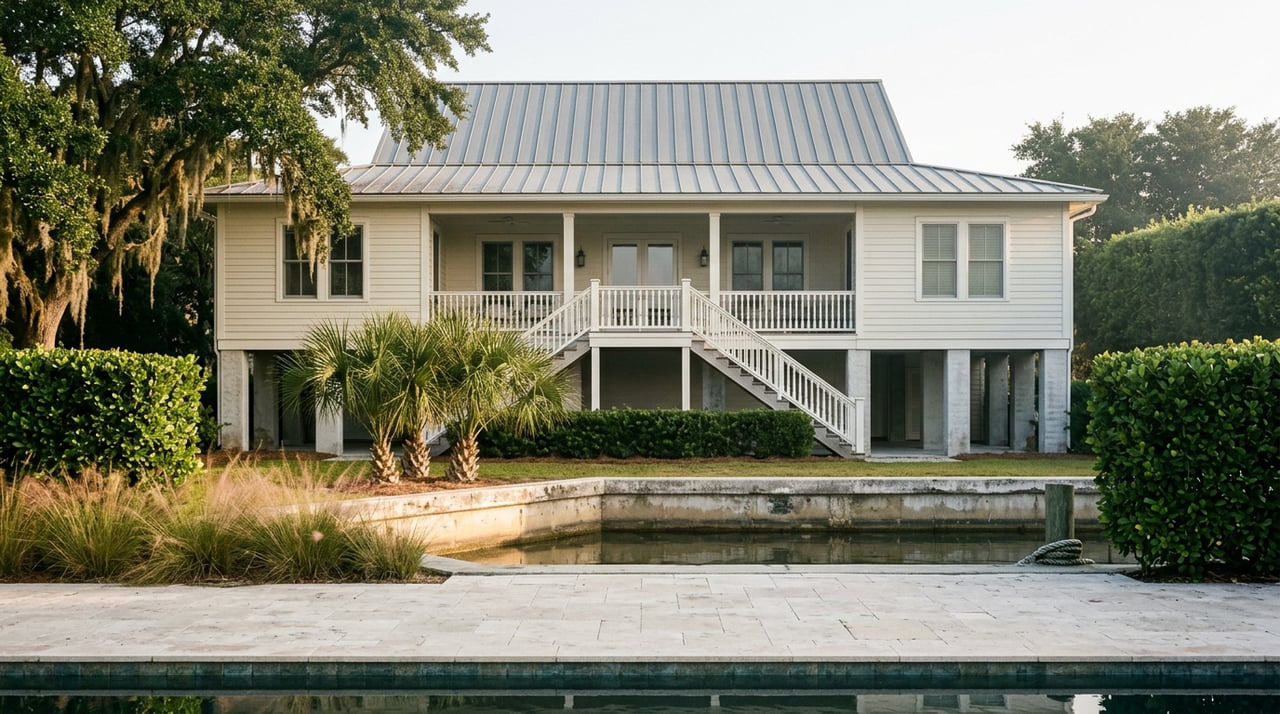
The nuance: Coastal isn't uninvestable. Non-elevated coastal is. Elevated homes built to updated Florida Building Code standards are holding value because view-driven demand hasn't disappeared — buyers are simply pricing insurance into their offers. The smart money here is buying the distressed lot and elevating, not buying the 1960s ground-level house and hoping.
Property Types Winning in 2026
Single-family rentals — the clearest winner. 4%–6% vacancy, ~4% annual rent growth, median rents near $2,600/month. Insulated from apartment oversupply, supported by families priced out of purchase by 6%+ mortgage rates.
Build-to-rent communities. Concentrated in northern Pasco (Wesley Chapel, Land O' Lakes) and eastern Hillsborough (Riverview, Brandon). The same demand driver as SFR, with institutional-grade scale.
Value-add Class C. Cap rates of 7.0% – 8.5%+ in North Tampa, East Tampa, and central Hillsborough — the highest yields in the metro, offset by higher turnover and management intensity.
Short-term rentals, selectively. Metro-wide ADR runs $160–$171/night at 60% annual occupancy, producing RevPAR around $102. Seasonality scores 82/100 for stability. Ybor and event-adjacent properties outperform; generic suburban STRs do not.
What's not winning: Class A/B multifamily. Apartment vacancy hit 10.7%, a metro record, driven by roughly 12,500 units delivered in 2024 and another 7,500+ delivering through 2026. Rents are flat to -2.5% YoY at ~$1,950/month, with one-to-two months free rent common as a concession. Over 20,000 cumulative new units have hit the market. Avoid until absorption catches up.
Luxury ($1M+) has normalized. South Tampa's Hyde Park, Palma Ceia, and Bayshore now see 60 to 90+ days on market. Turnkey and newly elevated luxury homes still set records. Older un-renovated luxury faces real negotiation pressure over wind and flood insurance costs.
What Investors Need to Watch in 2026
Insurance is the deal-killer line item.
Policy Type | Annual Premium |
|---|---|
Primary homeowners (HO-3) | $2,400 – $4,500 ($4,000–$6,000+ coastal or pre-1980s) |
Landlord / investment (DP-3) | $2,800 – $5,200 |
Flood (add-on) | $500 – $5,000+ by zone |
DP-3 landlord policies carry a 15%–25% surcharge over HO-3 because of tenant occupancy risk. Get a wind mitigation inspection — verified roof-to-wall straps and impact-rated openings save 15% to 35% annually. On a $4,000 premium, that's up to $1,400 a year, every year.
Property taxes and the non-homestead cap.
- Unincorporated Hillsborough (Brandon, Riverview): ~14.0–16.0 mills, effective rate 0.90%–1.05%
- City of Tampa: ~19.0–21.0 mills, effective rate 1.10%–1.20%
Investment properties get a 10% annual cap on assessed value increases — with two critical exceptions. The cap does not apply to School Board millage, and upon purchase the property reassesses to 100% of fair market value on the following January 1. The cap only begins accumulating in year two. Investors who underwrite year-one taxes based on the seller's tax bill get an unpleasant surprise.
Financing. 30-year fixed rates sit in the 6.1%–6.5% corridor with projections holding between 5.8% and 6.3%. That suppresses refinance waves and keeps debt service elevated. Underwrite at current rates, not at hoped-for rates.
Rental saturation is asset-specific. Class A/B apartments face near-term oversupply at 10.7% vacancy. Single-family rentals remain at 4%–6%. Whatever you read about "the Tampa rental market" is probably describing one of these two and being applied to the other.
Frequently Asked Questions
What is a good cap rate in Tampa? For residential rentals, 6.0% to 7.5% is a good target. By class: Class A in South Tampa, Channel District, and Downtown runs 4.8%–5.5%; Class B in Seminole Heights, Carrollwood, and Brandon runs 5.8%–6.8%; Class C and value-add in North Tampa, East Tampa, and central Hillsborough runs 7.0%–8.5%+.
Can you run an Airbnb in Tampa? Yes. Florida statute preempts local governments from banning short-term rentals outright or capping total booked days. You'll need a Florida DBPR Vacation Rental License, a Florida Sales Tax Number, and an active City of Tampa Local Business Tax Receipt through TampaConnect. Stays carry a 13.5% tax stack (6% state sales, 1.5% local surtax, 6% Hillsborough Tourist Development Tax), which Airbnb and similar platforms collect and remit automatically. In unincorporated Hillsborough County, a newer ordinance requires $200 annual registration per unit, a 24/7 local contact who can respond within one hour, and code enforcement inspections.
The override nobody mentions: HOA and condo association declarations supersede all of this. Many Tampa Bay associations prohibit leases under 30 to 180 days regardless of what state law permits. Read the declaration before you close.
How much is landlord insurance in Tampa? A DP-3 policy on a standard single-family investment property averages $2,800 to $4,200 per year. Flood zone is the biggest driver: Zone X adds $500–$610 annually, while Zone AE or VE can add $1,200 to $3,500+. Wind mitigation improvements cut 15%–35% off the windstorm portion.
Which Tampa neighborhoods are best for rental income? For cash-flow yield: Riverview and Brandon, with entry prices of $350,000–$410,000 against strong suburban family demand. For tenant quality and stability: Wesley Chapel and Land O' Lakes, where top-rated schools and new construction support $2,100–$2,800/month rents. For value-add and STR upside: Seminole Heights and Ybor City, driven by young professionals, healthcare workers, and university staff.
What's the minimum down payment on a Tampa investment property? Conventional single-family investment loans require 15% minimum, though 20%–25% is standard for competitive rates. Two-to-four unit properties require 25% for conventional non-owner-occupied financing. The exception: if you occupy one unit of a 2–4 unit property for at least 12 months, FHA (3.5% down) or VA (0% down) financing applies.
Why Work With The Lewkowicz Group
Tampa in 2026 is a market where the difference between a good deal and a bad one comes down to details that don't show up in a listing: whether a condo association has funded its reserves, whether a coastal property is elevated to current code, whether a wind mitigation report exists, what the tax bill will actually look like in year one.
Joe Lewkowicz has spent over 40 years in the Tampa Bay real estate market and sold thousands of homes across Hillsborough, Pinellas, and Pasco counties. He ranks in the top 1% of Realtors® in Tampa Bay and the top 1% of Coldwell Banker agents in North America, earning the International President's Elite award. His market knowledge comes from walking neighborhoods — there are few blocks in North Tampa where he hasn't sold a home.
Emeri Lewkowicz (License #SL3490114) brings a modern, data-driven approach to the team, with deep local knowledge and a focus on streamlining the transaction for today's market conditions.
What we provide investors:
- Neighborhood-level analysis grounded in current sales data, not last cycle's narrative
- Flood zone, elevation, and insurance cost assessment before you write an offer
- Condo association due diligence — SIRS, milestone inspection status, reserve funding, and assessment history
- Access to off-market inventory across North Tampa, South Tampa, and the Pasco corridor
- Guidance on Florida-specific financing, insurance, and tax considerations
Ready to find where the smart money is going in your price range?
Call Joe at (813) 245-8694 or Emeri at (813) 215-6374
Email [email protected] or [email protected]
500 N Westshore Blvd #850, Tampa, FL 33609